In today’s competitive aviation world, the quality of pilot training is more crucial than we sometimes think.
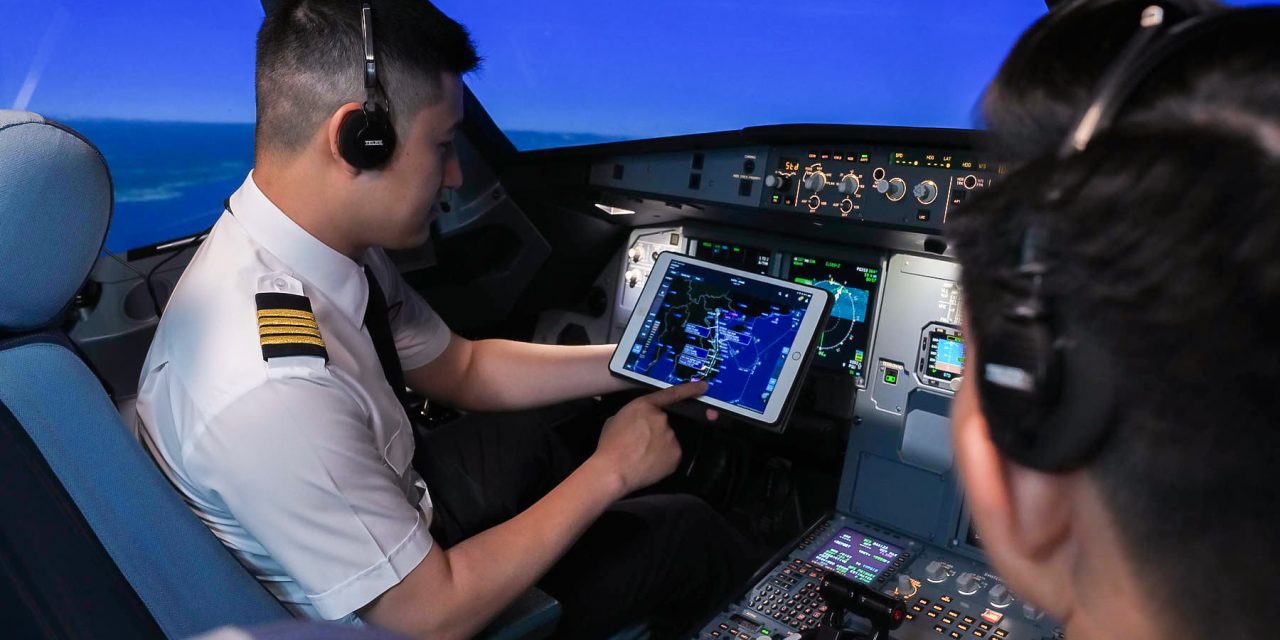
When a Type Rating instructor has recently handled a crosswind landing in a congested airspace or
navigated a system failure at cruising altitude, their instruction carries a different weight. Firsthand
operational experience brings nuance and realism to the classroom—something manuals and simulated
scenarios can’t necessarily fully replicate. This is one reason airline pilots who also instruct are valued in
training environments.
As the aviation industry faces an ongoing demand for new pilots—Boeing’s outlook projected more than
600,000 new commercial pilots will be needed globally by 2042—the quality and relevance of training are
under scrutiny. Instructors who actively fly bring current procedures, real-world problem-solving, and
operational awareness into their sessions. At the same time, teaching reinforces their own technical
precision, decision-making, and leadership. The result is a mutually beneficial dynamic—one that
strengthens both the next generation of pilots and those already flying the line.
According to Marcos Giner, Deputy Chief Flight Instructor for Type Rating Training at BAA Training, one of
the leading global aviation training organizations delivering both Ab Initio and Type Rating training, the key
value of having active airline pilots as instructors is their ability to translate operational realities into the
training environment, often in real time.
“From my experience at BAA Training, I constantly see the true value of having active airline pilots as
instructors. You can teach a checklist—or you can explain what it feels like to run that checklist under
pressure at 35,000 feet in turbulence. That’s the difference,” he says.
Pilots currently flying the line are not only up to date with SOPs and aircraft systems, they’re also familiar
with the subtle shifts that happen in daily operations. This includes recent ATC patterns, airline-specific
nuances, or issues that arise in flight data monitoring reports. These details can elevate a session from a
foundational to an impactful one.
“Students tend to engage more when they see the relevance,” he adds. “It’s not theory for them anymore.
It’s the world they’re about to step into.”
Interestingly, the benefit flows both ways. For instructors, teaching is a form of professional reinforcement.
“The moment you start teaching, you realize how many things you just do without thinking. Explaining
those steps forces you to reflect—and sharpen,” Giner touches on the point. “When pilots switch between
operational flying and instructional duties, they become more disciplined in how they brief, communicate,
and make decisions. There’s less room for complacency. You become more deliberate. Whether it’s
managing an abnormal situation or briefing a junior First Officer, the clarity you develop from instructing
shows up in your cockpit behavior.”
This cycle—fly, teach, reflect, refine—isn’t just beneficial for instructors personally. It, too, reinforces
standardization and safer behaviors within airline operations. Beyond technical knowledge, teaching has a
ripple effect on soft skills.
“Instructors often find themselves coaching more than just flying technique,” Giner notes. “You’re shaping
communication habits, decision-making styles, and how someone responds to stress.”
These are core components of Crew Resource Management (CRM), and instructors who are also active
pilots carry those lessons with them back into the flight deck. They tend to become more patient, more
structured in their communication, and more proactive in creating a positive cockpit environment.
“There’s a level of emotional intelligence that comes from teaching that doesn’t always develop through
line flying alone,” he says.
This, in turn, fosters a stronger training and safety culture across the airline—not just in the sim, but on the
line itself.
The dual-role dynamic brings immediate relevance to training and reinforces operational excellence on the
line. It’s a proven, effective approach that keeps both instruction and airline operations grounded in real-
world application. Its continued support and refinement are key to developing adaptable, safety-minded
pilots for the demands of today’s flight deck.